
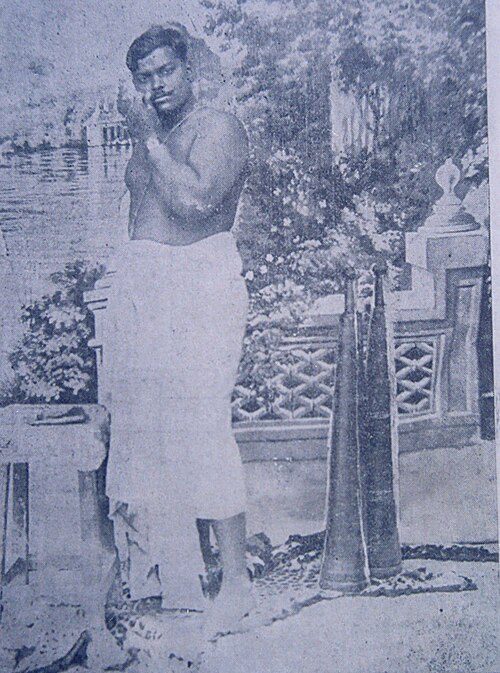
Chandra Shekar Sitaram Tiwari 23 July 1906 -27 February 1931, popularly known as Chandra shekhar azad, was an indian hindustan republic associatory under its new name of hindustan socialist republican association after the death of its founder, ram prasad bismil , and three other prominent party leaders, roshan singh , rajendra nath lahiri and ashfaquall khan. he hailed from bardark village in unnao district of united provines and his parents were sitaram tiwari and jagrani devi. he often used the pseudonym ” balraj ‘ while signing pamphlets issued as the commander- in – chief of the HSRA. Bhagat singh, sukhdev thapar and shivaram rajguru worked closely with him as his pupil.
who was the Chandra Shekar Tiwari?
Chandra Shekar Tiwari who was popularly known as Chandrashekar Azad was an indian revolutionary leader and a freedom fighter.
early life
Chandra Shekhar Azad was born on 23 July 1906 in bhabhara village as Chandra Shekar Tiwari, in a kanyakubja brahmin family , in the princely state of alirajpur. his forefathers were from badarka village, of the unnao district of uttar pradesh. his mother, jagrani devi, was the third wife of sitaram tiwari , whose previous wives had died young. after the birth of their first son , sukhdev , in badarka, the familyt moved to the alirajpur state.
his mother wanted her son to be a great sanskrit acholer and persuaded his fother to send him to kashi vidyapeeth at banaras to study. in 1921, where the non- cooperation movement was at its height, chandra shekara, then a 15- years- old student, joined. as a result, he was arrested on 24 december. on being prsented before the parsi sidtrict magisttrate justice M .P . khareghart two week later, he give his name as ” Azad , his father s name as swatantra” and his residence as jail. the angrered magistricte punished him with 15 blows.
who was Chandrashekar Azad?
Chandrashekar Azad, a fearless freedom fighter, led revolutionary actions like kakori robbery shaped HSRA, and sacrificed his life for Indians independence. Chandrashekar Azad was born on 23 July 1906 in alirajpur, Madhya Pradesh Shekhar Sitaram Tiwari . at the age of 15, he was arrested during the non -cooperation movement.
with bhagat Singh
the Hindustan republic association was formed by ram prasad Bismil, Jogesh Chandra Chatterjee, sachindra Nath Sanyal and sachindra Nath Bakshi in 1923. in the aftermath of the kakori train robbery in 19255, the British suppressed revolutionary activities. prasad, Ashfaq Ulla khan, thakur Roshan Singh and Rajendra Nath Lahiri were sentenced to death for their participation .Azad Keshab Chakravarthy and murari Lal Gupta evaded capture. Azad later reorganished the HRA with the help of fellow revolutionaries like shiv Verma and Mahabir Singh.
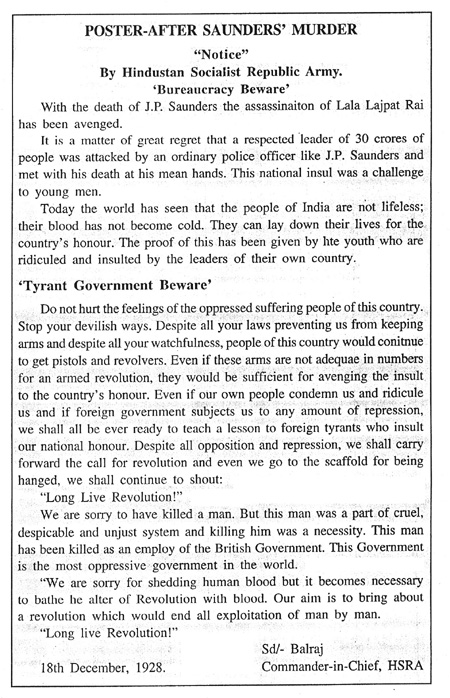
in 1928,along with bhagat Singh and other revolutionaries’ he secretly reorganised the Hindustan republican association ( HRA), renaming it as the Hindustan socialist republican association on 8 -September, so as to achieve their primary aim of an independent socialist india, Azad then conspired with revolutionaries like bhagat Singh, Sukhdev Thapar and Shivaram Rajguru to assassinate the superintendent of police, James Ascott in order to avenge Lala Rajpath rai’s death. however, in a case of mistaken identity, the plotters assassinated john, Saunders, an assistant superintendent of police, instable Channan Singh who attempted to chase Singh and Azad, as he was leaving the district police headquarters in Lahore on 17 December 1928. an insight into his revolutionary activities is provided by Manmath Nath Gupta ,a fellow member of HARA in his numerous writings. Gupta has also written his numerous writings. Gupta has also written his biography titled ” Chandrashekhar Azad” in his book history of the indian revolutionary movement which provides further insights on Azad’s activities, his ideologies, and the HSRA.
Death
Death Aftermath
On February, the CID head of police at Allahabad, J.R.H. Nott-Bawyer, was tipped that Azad was at Alfred Park. This intelligence set in motion the subsequent police operation, culminating in the confrontation that marked a pivotal moment in the revolutionary movement.
activities in jhansi
Azad made Jhansi his organisations hub for some time. he used the forest of Orchha, situated 15 kilometres from Jhansi, as a site for shooting practice and, being an expert marksman, he trained other members of his group. he built a hut near to a hanuman temple on the banks of the Satar river and lived there under the alias of pandit Harishankar Brahmacharini for a long period. he taught children from the nearby village of dhimarpura and thus managed to establish a good rapport with the local residents.
while living in Jhansi, he also learned to drive a car at the Bundelkhand motor garage in Sadar bazar. Sadashiv Rao malkapurkar, Vishwanath Vaishampayan and Bhagwan das mahua came in close contact with him and became an integral part of his revolutionary group. they then congress leaders, Raghunath Vinayak dhulekar and Sitaram Bhaskar Bhagwat were also close to Azad. he also stayed for some time in the house of Rudra Narayan Singh at Nai baste, as Bhagwat’s house in Nagra.
lagacy
Jawaharlal Nehru in his autobiography wrote that Azad met him a few weeks before his death, inquiring about the possibility of not being considered an outlaw as a result of gandhi-lrwin pact. Nehru wrote that Azad also saw the futility of his methods and so did many of his associates, ethods’ would work either.
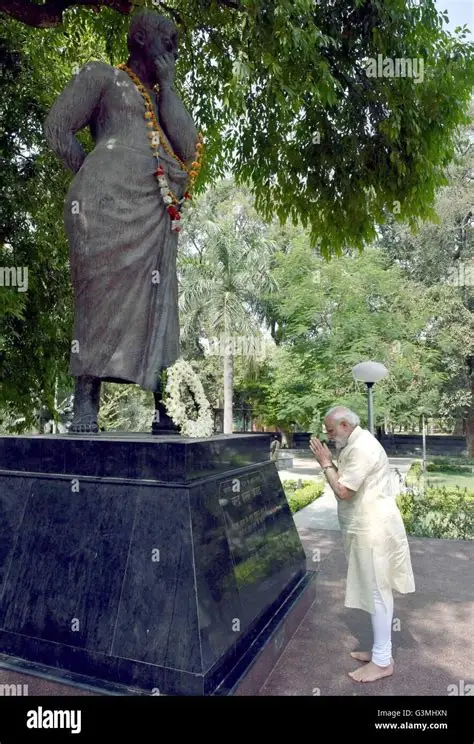
several school, colleges, roads, and other public institutions across india are also named after Azad.
starting from Jagdish Gautam’s 1963 film Chandrasekar Azad and Manoj Kumar s 1965 film shaheed, many films have featured the character of Azad. Manmohan played Azad in the 1965 film, sunny Deol portrayed Azad in the movie 23rd March 1931: shaheed, Azad was portrayed by akhilendra Mishra in the legend of bhagat Singh and raj sushi portrayed Azad in shaheed-E-Azad. in the 20006 films. rang de Basanti, produced and directed by Rakeysh Omprakash Mehra, Azad was portrayed by Aamir khan, which was about the lives of Azad, bhagat Singh, Shivaram Rajguru, ram prasad Bismil, and Ashfaq Ulla khan; the film dram parallels between the lives of young revolutionaries such as Azad and Singh, and today’s youth, and dwelt upon the lack of appreciation among indian youth today for the sacrifices made by these men.