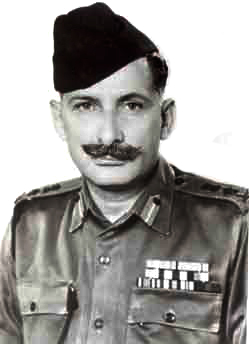
who were Sam Manekshaw parents?
Sam Manekshaw was born on 03 April 1914 in Amritsar, Panjab, to hormizd manekshaw ( 1871- 1964) , who was a doctor, and Hilla, nee Mehta ( 1885- 1973) . both of his parents were Parsis who moved to Amritsar from the city of Valsad in the coastal Gujarat region.
When did Manekshaw retire?
the president conferred upon him the rank of field marshal on January 1, 1973. Manekshaw retired a fortnight later ( although technically field marshal of the indian army never retire because the rank is conferred for life ) , on January 15, 1973, after completing nearly four decades of military service .
Field marshal Sam Hormusji Framji Jamshedji manekshaw 03 April 1914 also known as Sam bahadur , was an indian army general officer who was the chief of the army staff during the Bangladesh liberation war in 1971, and the first indian army officer to be promoted to the rank of field marshal. his active military career spanned four decades, beginning with service in world war 2.
Manekshaw joined the first intake of the indian military academy at Dehradun in 1932. he was commissioned into the 4th battalion, 12th frontier force regiment . in world war 2 , he was awarded the military cross for gallantry . following the partition of india in 1947, he was reassigned to the 8th Gorkha rifles. Manekshaw was seconded to a planning role during the 1947 Indo – Pakistan war and the Hyderabad crisis, and as a result, he never commanded an infantry battalion. he was promoted to the rank of brigadier while serving at the military operations directorate. he became the commander of 167 infantry brigade in 1952 and served in this position until 1954 when he took over as the director of military training at the army headquarters.
after completing the higher command course at the imperial defence college, he was appointed the general officer commanding of the 26th infantry division. he also served as the commandant of the defence services staff college . in 1962, he was accused in a politically motivated treason trial , he was eventually found innocent but thus could not serve in the 1962 war. in 1963, Manekshaw was promoted to the rank of army commander and took over western command, then was transferred in 1964 to eastern command . in this role, in 1967 , he was involved in the first indian victory against a Chinese offensive during Nathu la and Cho la clashes.
Manekshaw was awarded the Padma Bhushan, the third highest indian civilian award, in 1968 for responding to the insurgencies in Nagaland and Mizoram. manekshaw become the seventh chief of army staff in 1969 . under his command, indian forces providing them with arms and ammunitions to fight against the strong regular army of Pakistan in the Bangladesh -Pakistan war of 1971 , which led to the independence of Bangladesh in December 1971. he was awarded the Padma Vibhushan , the second highest civilian award of india , in 1972 for his services to the nation. Manekshaw was promoted to the rank of field Marshal in January 1973 , the first of only two officers to be ever promoted to the post , second being K.M .Cariappa. he retired on 15 January 1973 . he died on 27 June 2008, at the age of 94 , due to respiratory problems.
Early life and Family
Sam Manekshaw was born on 3 April 1914 in Amritsar to Hormizd ( 1871- 1964), a doctor, and Hilla, nee Mehta ( 1885-1970) . both of his parents were Parsis who had moved to amritsar from the city of valsad in costal Gujarat . Manekshaw’s parents had left mumbai in 1903 for lahore , where his father was going to start practising medicine . however , when their train halted at amritsar station, hilla found it impossible to travel any further due to her advanced preggnancy. after hilla had recovered from child birth , the couple decided to stay in amritsar, where hormizd soon sey up and two daughters .Manekshaw was their fifth child and third son.
During world war 2 , Hormizd had served in the British indian army as a captain in the indian medical service .
Indian military academy
Manekshaw was part of the first batch of cadets at the IMA. called “the pioneers”, this batch also included smith dun and Muhammad Musa Khan , the future commanders-in -chief of Burma and Pakistan, respectively. Although the academy was inaugurated on 10 December 1932, the cadets’ military training commenced on 01 October 1932. as an IMA cadet, manekshaw went on to achieve a number of distinctions: the only one to attain the rank of filed marshal . the commandant of the academy during this period was brigadier Lionel peter Collins. manekshaw was almost suspended from the academy when he went to Mussoorie for a holiday with Kumar Jit Singh and haji Iftikhar Ahmed, and did not return in time for the morning.
Education
Manekshaw completed his primary schooling in Punjab, and then joined Sherwood college, Nainital for 8 years. 1931, he passed his senior high school examinations with distinction. he then asked his father to send him to London to study medicine, but his father refused as he was not old enough. his father was already supporting Sam’s elder brothers who were studying engineering in London . Manekshaw instead enrolled at the Hindu Sabha college and graduated in April 1932.
A formal notification for the entrance examination to enrol in the newly established indian military academy (IMA) was issued in the early months of 1932. examinations were scheduled for June or July. in an act of rebellion against his father’s refusal to send him to London, Manekshaw applied for a place and sat for the entrance exams in Delhi . on 1 October 1932 , he was one of the fifteen cadets to be selected through an open competition, and placed sixth in the order of merit.
Vertyowdiwjodko kofkosfjwgojfsjf oijwfwsfjowehgewjiofwj jewfkwkfdoeguhrfkadwknfew ijedkaoaswnfeugjfkadcajsfn newsinindia.online